Grammar

Time Has Flew By Or Time Has Flown By: What Is the Difference & Which Is Correct?
Time Has Flew By Or Time Has Flown By: What Is the Difference & Which Is Correct

Time-related expressions can be confusing, especially when similar phrases sound natural in conversation. One common question is whether you should say time has flew by or time has flown by.  Although both may sound familiar, only one is grammatically correct in standard English. This guide explains the difference, proper grammar, examples, and practical tips to … Read more
Soo Vs So: What Is the Difference & Which Is Correct?

Soo Vs So: What Is the Difference & Which Is Correct

Many English learners wonder whether they should use soo or so because the two words look very similar. However, they are not equally correct in standard English. Understanding the difference helps you avoid spelling mistakes and communicate more clearly in writing, schoolwork, business emails, and everyday conversations. Comparison Overview Although soo and so differ by … Read more

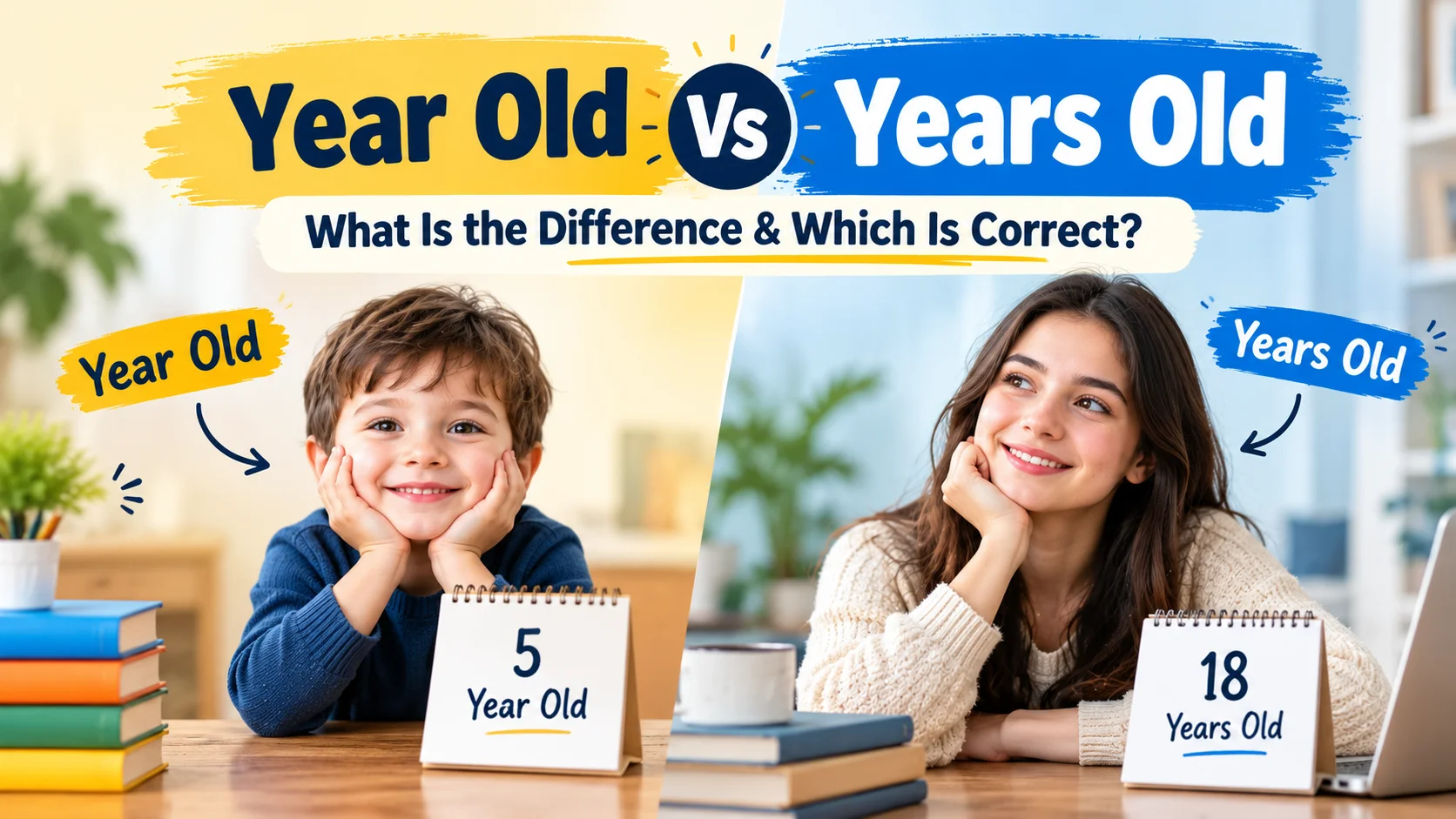
Year Old Vs Years Old: What Is the Difference & Which Is Correct?

Year Old Vs Years Old: What Is the Difference & Which Is Correct

When talking about someone’s age, many English learners wonder whether they should write year old Vs years old. The difference may seem small, but using the wrong form can make your writing sound unnatural or grammatically incorrect. This guide explains the meaning, grammar, usage, and real-world examples of both expressions so you can confidently choose … Read more

Sweet Vs Sweat: What is the Difference & Which is Correct?

Sweet Vs Sweat: What is the Difference & Which is Correct

Many English learners confuse sweet and sweat because they look and sound somewhat similar. However, they have completely different meanings and are used in different situations. Understanding the difference between sweet vs. sweat will help you improve your grammar, vocabulary, speaking, and writing skills while avoiding common mistakes. Comparison Overview Although sweet and sweat differ … Read more

30 Unique Similes For Dumb to Elevate Your Words (2026)

Unique Similes For Dumb to Elevate Your Words

Similes For ignorant are creative comparisons that describe someone acting foolish, unaware, or lacking understanding in a specific situation. Writers use them to add humor, emphasize mistakes, or create memorable descriptions. Whether you’re writing stories, essays, or casual conversations, the right simile can make your language more vivid and engaging. In this guide, you’ll discover … Read more

30 Unique Similes For Perseverance to Elevate Your Words (2026)

Unique Similes For Perseverance to Elevate Your Words

Unique Similes For Perseverance help writers describe determination, resilience, and the ability to keep moving despite challenges. They make writing more vivid, emotional, and memorable by comparing persistence to familiar objects, people, or forces of nature. Whether you’re writing stories, speeches, essays, or motivational content, these similes add depth and color to your words. In … Read more

30 Unique Similes For Devoted to Elevate Your Words (2026)

Unique Similes For Devoted to Elevate Your Words

Being devoted means showing unwavering loyalty, deep commitment, and genuine care toward a person, cause, belief, or goal. Using Unique Similes For Devoted helps writers express these qualities vividly and memorably. Instead of simply saying someone is devoted, a well-crafted simile paints a picture that readers instantly understand. Whether you’re writing stories, speeches, essays, poems, … Read more

30 Unique Similes For Mad to Elevate Your Words (2026)

Unique Similes For Mad to Elevate Your Words

Feeling angry is a common human emotion, but describing it creatively can make your writing much more engaging. Unique Similes for Mad help readers picture the intensity, cause, or style of someone’s anger through vivid comparisons. Whether you’re writing a story, poem, essay, or conversation, these similes can add emotion and color to your words. … Read more

30 Unique Similes For Complex Ideas to Elevate Your Words (2026)

Unique Similes For Complex Ideas to Elevate Your Words

Understanding Unique Similes for complex ideas can help you describe difficult ideas, confusing situations, layered emotions, and intricate designs vividly and memorably. Instead of simply saying something is “complicated,” a well-chosen simile paints a clearer picture for your readers. Whether you’re writing essays, stories, speeches, or everyday conversations, these similes will make your language more … Read more