Nauman Anwar

Should You Say Thanks a Lot: What Is the Difference & Which Is Correct?
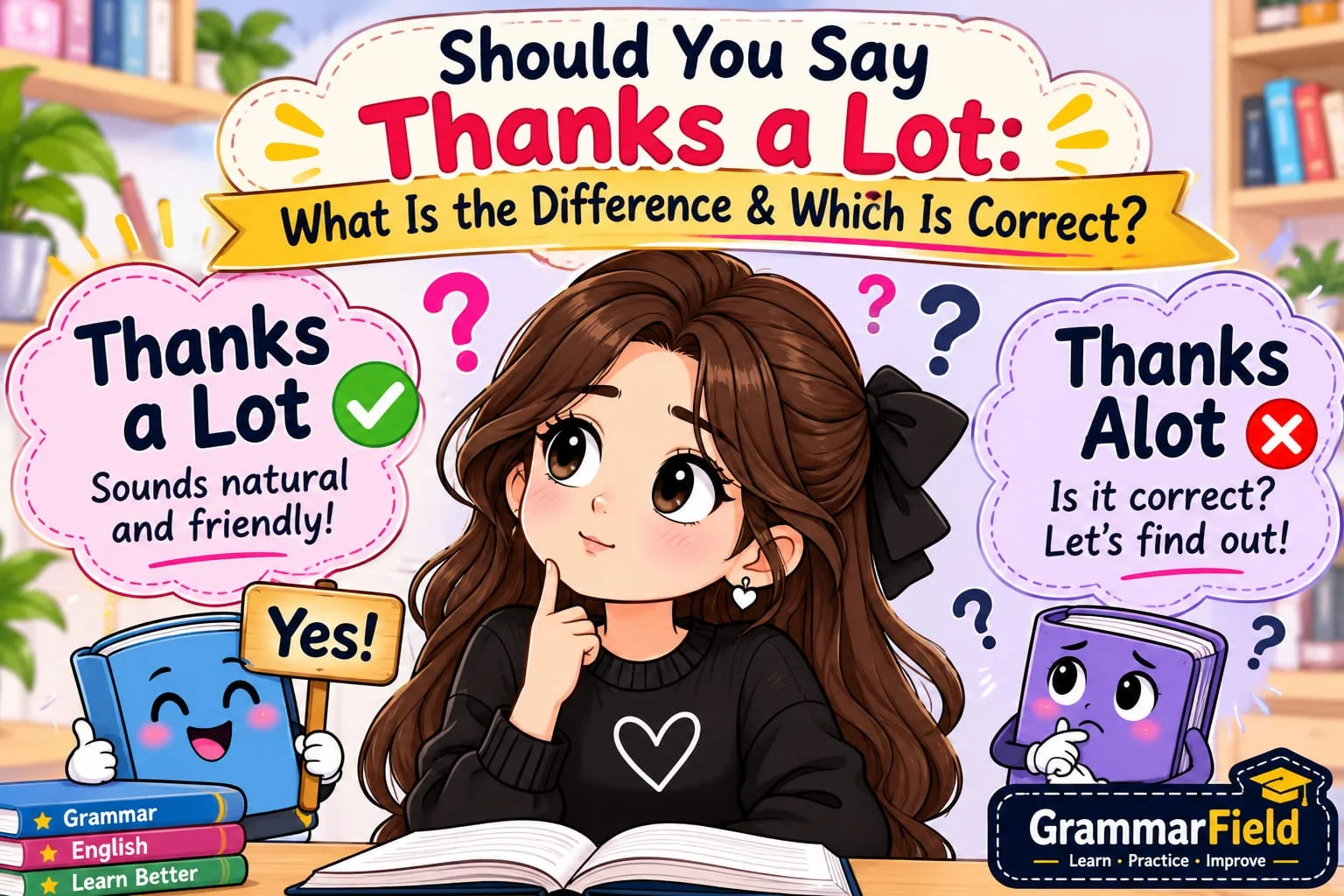
Should You Say Thanks a Lot: What Is the Difference & Which Is Correct

Have you ever wondered whether saying “Thanks a Lot” is appropriate in everyday conversations? Its common expression helps people show gratitude and appreciation, but its meaning can sometimes depend on the situation and tone. While it usually sounds friendly and polite, it may occasionally come across as sarcastic or insincere. Understanding when to use this … Read more
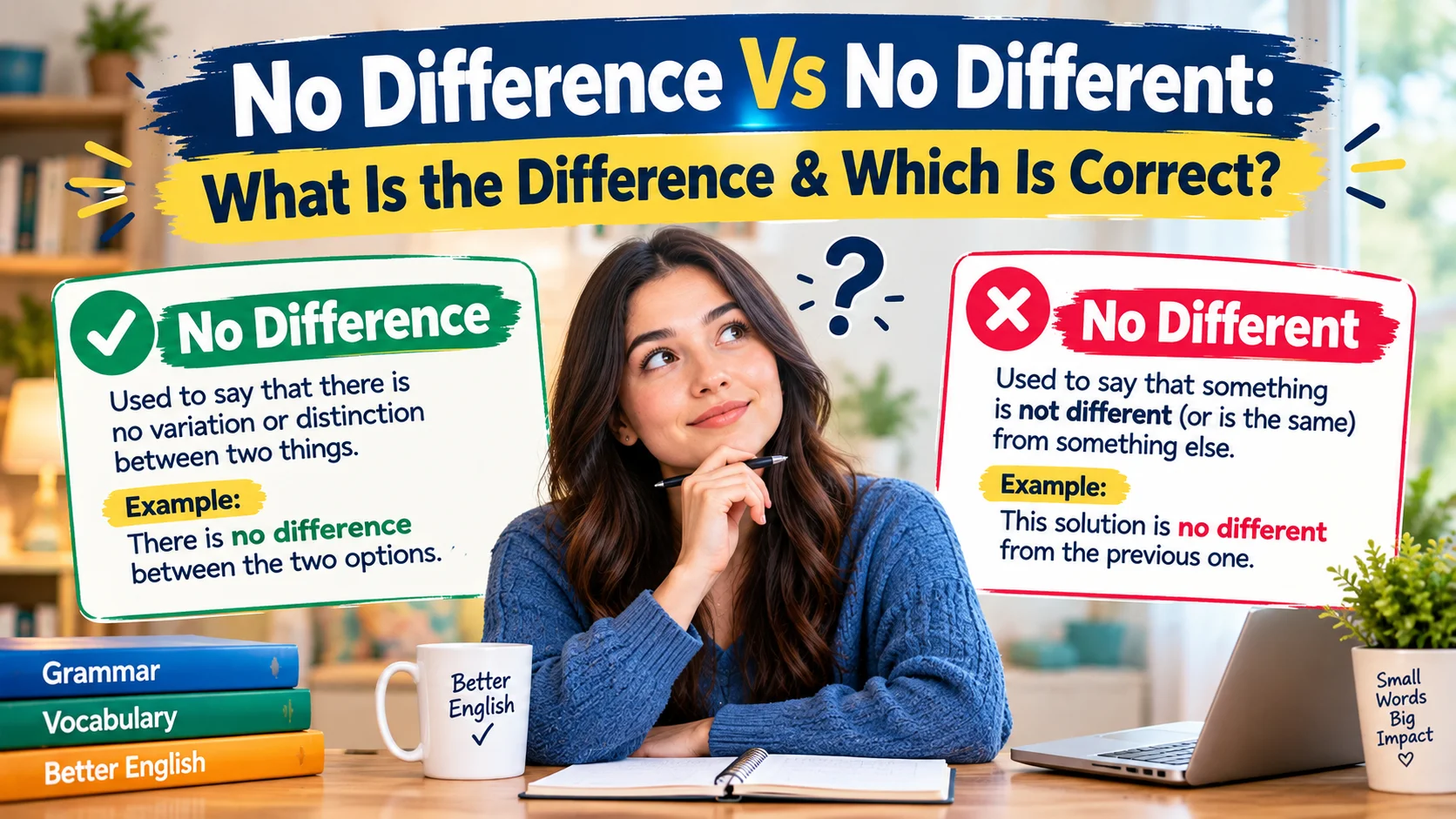
No Difference Vs No Different: What Is the Difference & Which Is Correct?

No Difference Vs No Different: What Is the Difference & Which Is Correct

Many English learners get confused by “no difference vs no different” because both express similarity. However, they belong to different parts of speech and are used in different grammatical structures. Understanding when to use each one will help you write and speak English more naturally while avoiding common grammar mistakes. Understanding the difference between “no … Read more

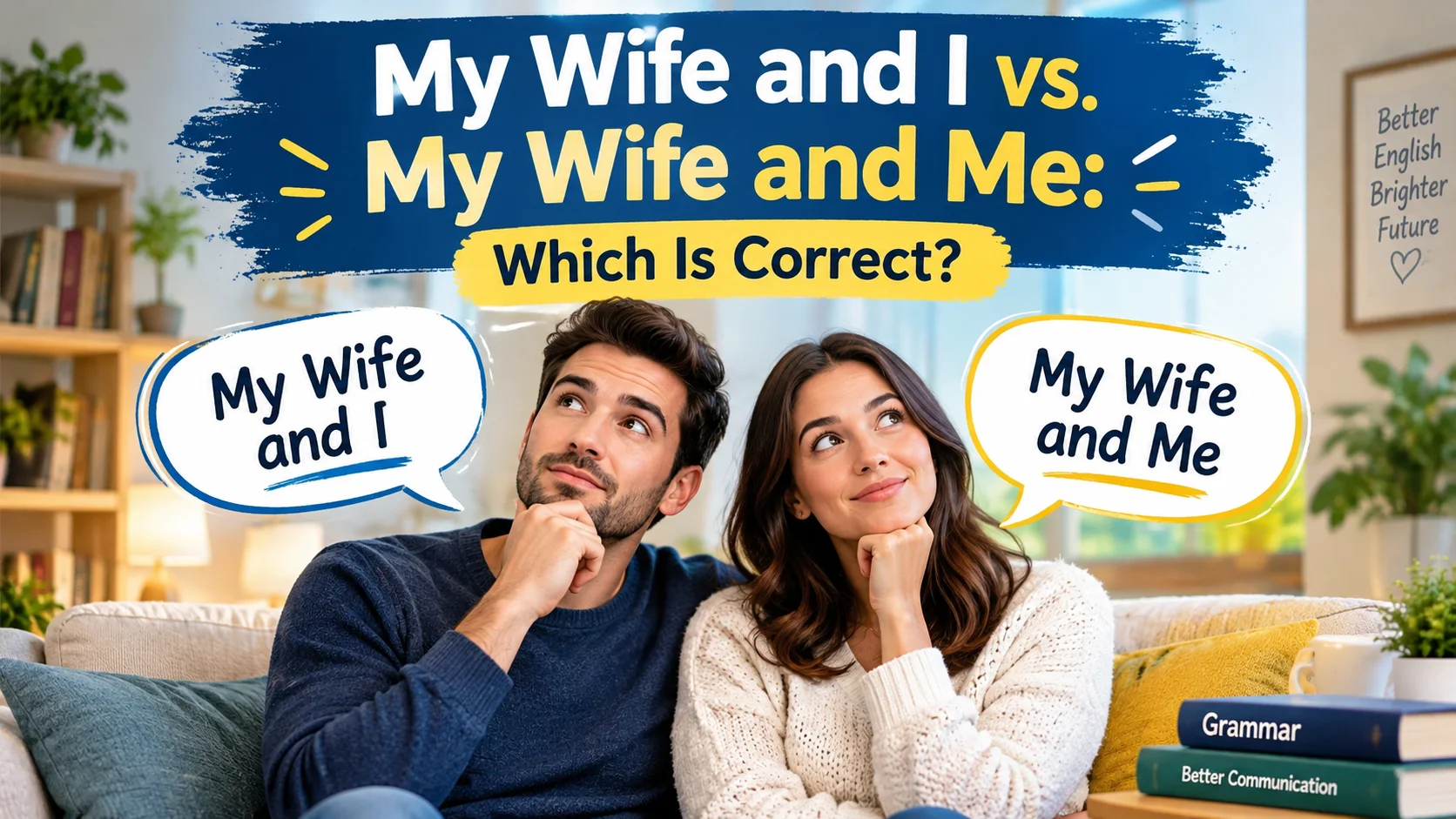
My Wife and I vs. My Wife and Me: Which Is Correct?

My Wife and I vs. My Wife and Me: Which Is Correct

Many English learners struggle with the phrases “my wife and I vs. my wife and me” because both sound natural in conversation. However, only one is grammatically correct in a given sentence, depending on whether it functions as the subject or the object. Understanding this difference will help you write and speak English more confidently … Read more

Even Though vs. Eventhough: Which Spelling Is Correct?

Even Though vs Even Though: What Is the Difference & Which Is Correct

Many English learners ask whether “even though” is one word or two. The standard form is always two words: even though. “Eventhough” is a common misspelling. Use even though to introduce a dependent clause that contrasts with the main clause, as in: “Even though it was raining, we played football.” Comparison Overview “Even though” is … Read more

Color or Colour: What is the Difference & Which is Correct?

Color or Colour: What is the Difference & Which is Correct

The words colour and colour have the same meaning, but they are spelled differently depending on the variety of English being used. This difference often confuses English learners, writers, and professionals. Understanding when to use color or colour will help you write accurately and consistently for your audience. Comparison Overview Color or colour both refer … Read more

30 Unique Angry Similes to Elevate Your Words (2026)

Unique Angry Similes to Elevate Your Words

Angry Similes make your writing more vivid by comparing anger to something familiar and easy to imagine. Instead of simply saying someone was angry, you can paint a stronger picture that helps readers feel the emotion. Whether you’re writing stories, essays, speeches, or everyday conversations, these similes add color and personality to your words. In … Read more

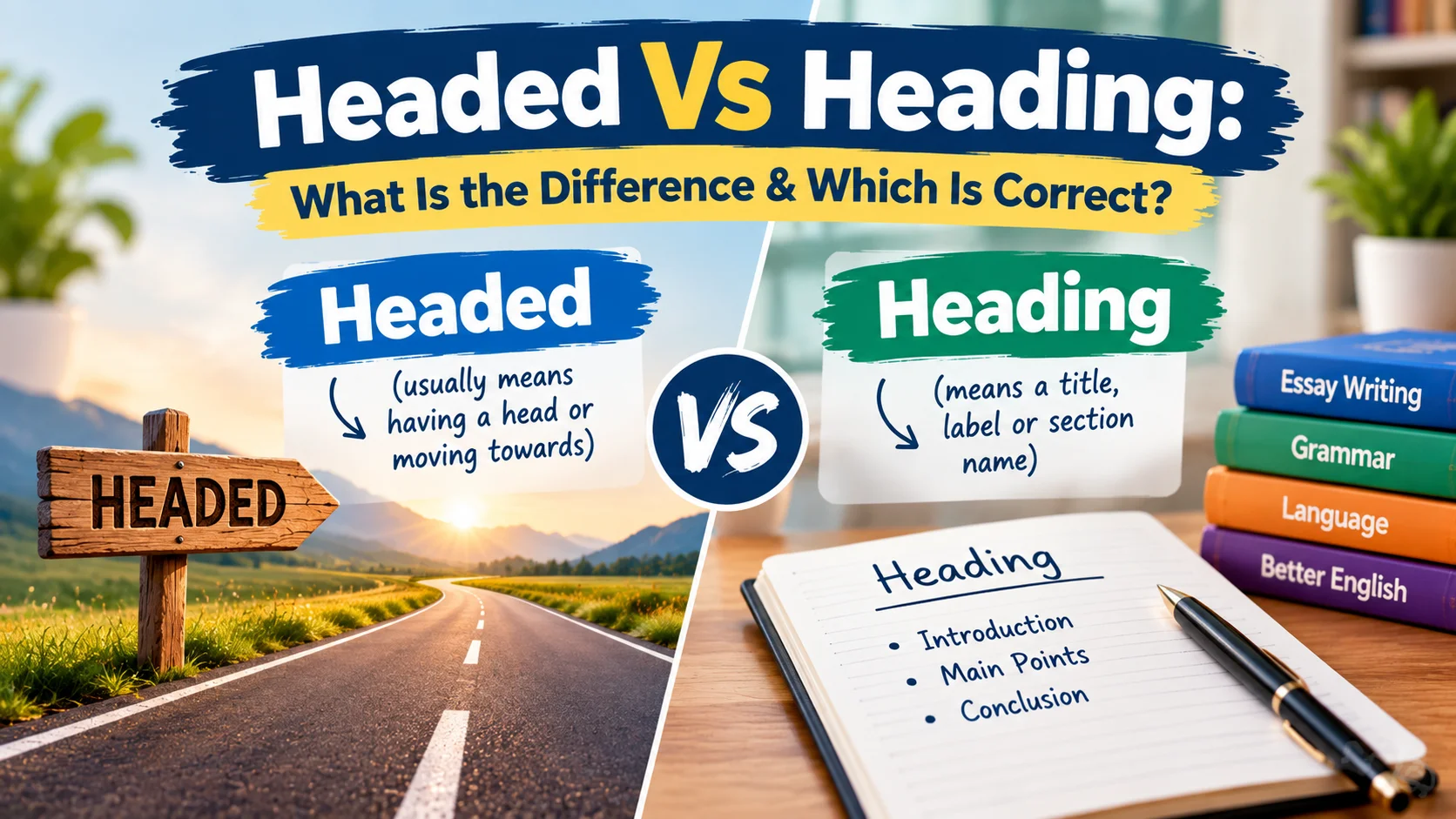
Headed Vs Heading: What Is the Difference & Which Is Correct?

Headed Vs Heading: What Is the Difference & Which Is Correct

Many English learners get confused between headed vs heading because both come from the verb head, but they serve different grammatical purposes. Understanding when to use each word correctly will improve your writing, speaking, and overall grammar. This guide explains their meanings, differences, grammar rules, examples, and practical usage in simple language. Comparison Overview Although … Read more

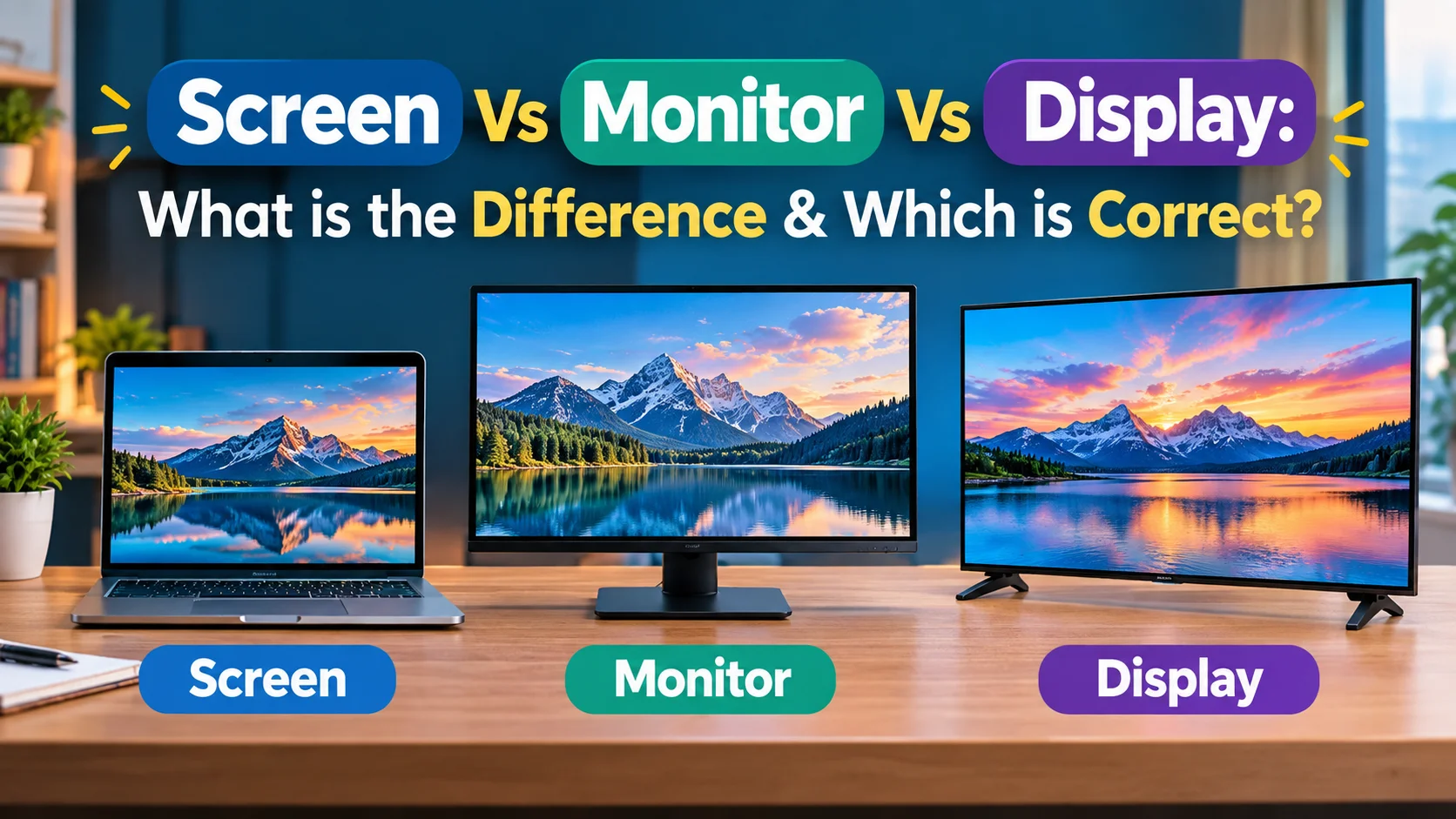
Screen Vs Monitor Vs Display: What is the Difference & Which is Correct?

Screen Vs Monitor Vs Display: What is the Difference & Which is Correct

When talking about computers, TVs, smartphones, or other electronic devices, the terms screen, monitor, and display are often used interchangeably. However, they don’t always mean the same thing. Understanding the differences between these three terms helps you communicate more accurately, whether you’re buying technology, writing about electronics, or simply discussing devices in everyday conversations. Comparison … Read more

30 Unique Similes For Complex Ideas to Elevate Your Words (2026)

Unique Similes For Complex Ideas to Elevate Your Words

Understanding Unique Similes for complex ideas can help you describe difficult ideas, confusing situations, layered emotions, and intricate designs vividly and memorably. Instead of simply saying something is “complicated,” a well-chosen simile paints a clearer picture for your readers. Whether you’re writing essays, stories, speeches, or everyday conversations, these similes will make your language more … Read more